
Collection daily, 4–10 PM
Worked on its own

Wedding Dress Cleaning in Dubai

Cleaned by hand, finished by hand and boxed acid-free for storage. Worked on its own rather than in a batch, and photographed throughout.

  • Quoted from photos before collection
  • Hand cleaned, never batched
  • Boxed acid-free for long-term storage
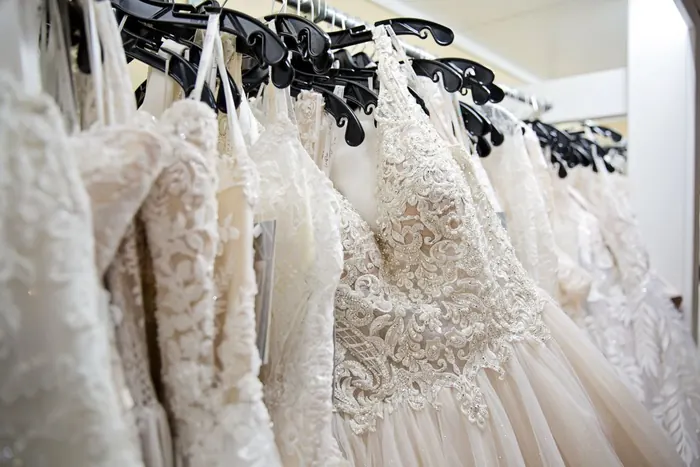
A white lace and tulle wedding dress hanging indoors
Photographed firstEvery panel, before work
Weighed at your doorYou hear the price first
5–10 daysHand finishing takes time
Cleaned on its own
Photographed throughout
Hand finished, layer by layer
Acid-free boxing
One gown at a time

The damage on a wedding dress is mostly invisible on the day

What shows is the hem: dust and grit from a venue floor, and in Dubai usually sand if any part of the day was outdoors. What does not show is the problem. Champagne, soft drink and cake leave sugar in the fabric that is colourless when it dries and turns brown over the following year as it oxidises. A dress put straight into a wardrobe after the wedding comes out stained in places nobody spilled anything.

That is why timing matters more here than with any other garment: the sooner a gown is cleaned, the less there is to undo. Each dress is quoted from photographs, worked on its own rather than in a batch, and returned either on a padded hanger or boxed acid-free for storage.

A dress almost never comes in alone. The veil, the shoes and the clutch were at the same event and picked up the same hem dirt and the same champagne, and they are quoted together so nothing is missed in the box afterwards. Where the gown is being kept to wear again rather than stored, clothing alterations can take it in or shorten it once it is clean, which is the right order and not the other way round.

Per gownQuoted individually
5–10 daysHand cleaning and finishing
4-10 PM, dailyCollection window
All of DubaiFree collection
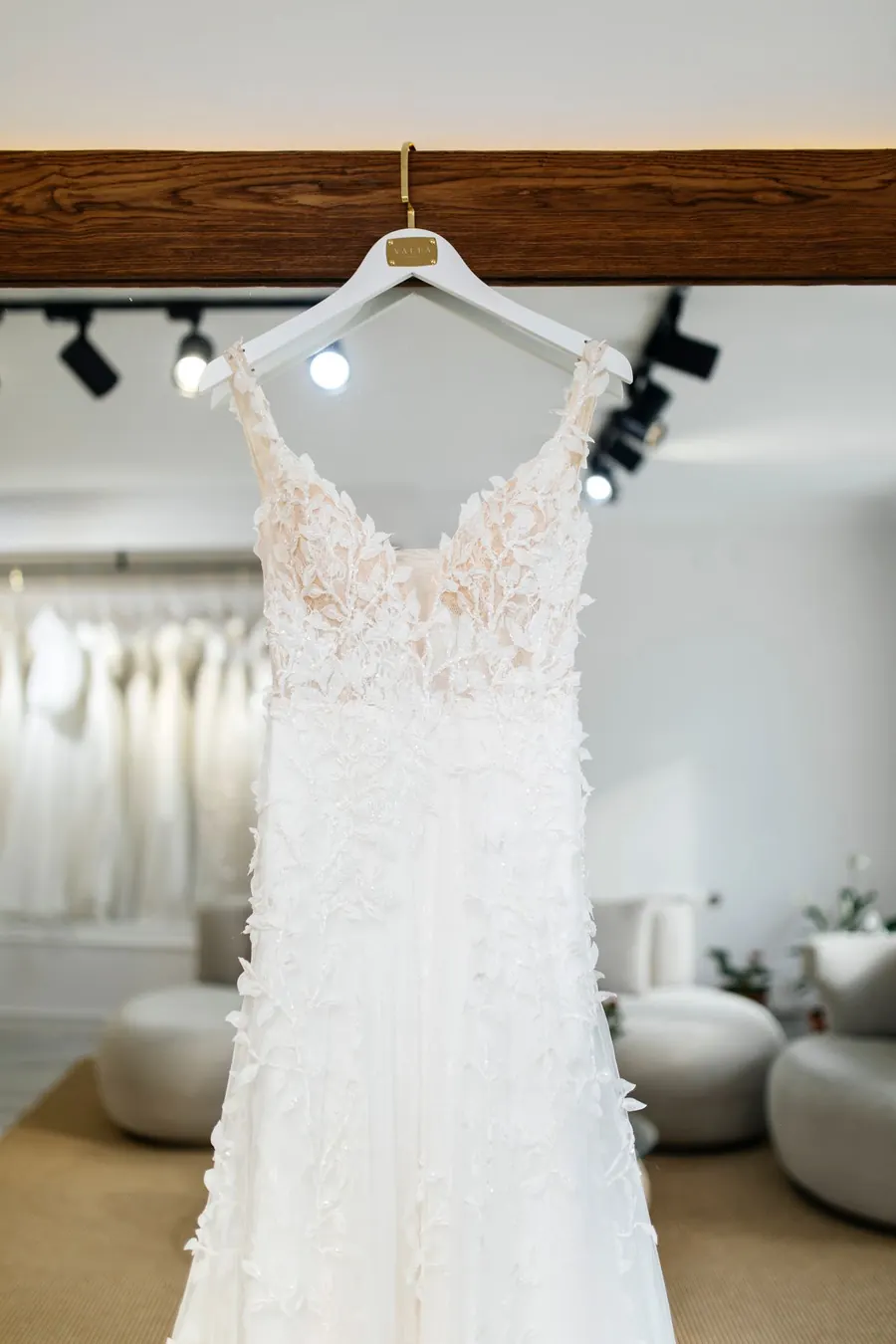
A delicate lace gown on a hanger in a bridal room
Quoted per gownWorked on its own
What's included

What happens to a gown

Every stage photographed. Nothing starts before you have seen the assessment.

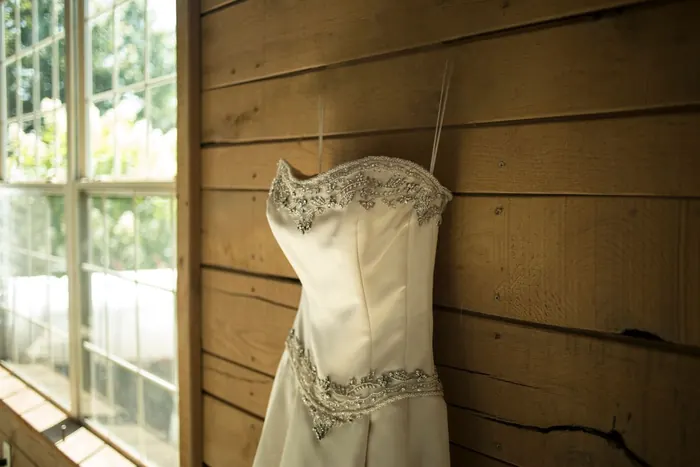
An embroidered gown hanging beside a window First

Assessed and photographed panel by panel

Hem, train, bodice, straps, beading and any existing damage are photographed before anything is touched, and the assessment comes to you with the quote.

  • Every panel and the full hem photographed
  • Loose beading and open seams noted
  • Assessment sent before any work
Send photos first →
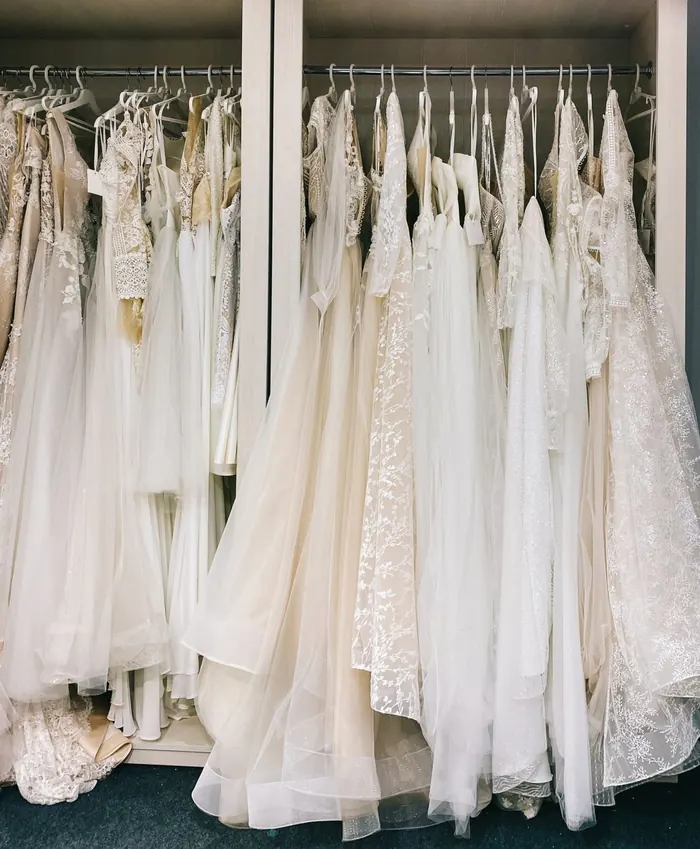
Lace wedding gowns on a rail in a bridal boutique Invisible

Sugar stains found before they show

Champagne and soft drink leave no visible mark when dry but oxidise brown over a year in storage. The whole dress is checked under light for sugar residue and those areas are treated even where nothing is visible.

  • Checked under light, not by eye alone
  • Treated even where nothing shows yet
  • This is the step that matters for storage
Ask about storage →
Bridal gowns hanging in a row after finishing Hem

Hem and train worked by hand

The hem carries the most and takes the longest: venue dust, sand, tyre marks from a car park, grass. It is worked by hand, section by section, before the dress goes anywhere near a general clean.

  • Worked in sections, by hand
  • Sand and grit taken out dry first
  • Tulle and lace layers separated and done individually
Describe the hem →
Formal and bridal dresses hung and covered for storage The clean

Cleaned on its own, never in a batch

The gown runs alone. Dye transfer from another garment onto ivory silk is not recoverable, and a wedding dress is not where you accept that risk to fill a machine.

  • Its own cycle, every time
  • Solvent filtered fresh
  • Beading and appliqué protected before cleaning
Ask about your fabric →
Before You Book

When to send it

With most garments timing barely matters. With a wedding dress it is most of the outcome.

Send it in the first few weeks

  • Any champagne, wine, soft drink or cake contact — sugar oxidises brown over the following year whether you can see it now or not
  • Outdoor or beach ceremonies — sand and salt in the hem keep working at the fibres
  • Visible marks of any kind — every week makes them harder
  • Anything stored in a plastic cover since the day
  • A dress that is being resold or passed on

Still worth doing later

  • A dress already stored a year or more — much is still recoverable
  • Yellowing at the hem or under the arms from old storage
  • A gown being rebo xed properly for the first time
  • A mother’s or grandmother’s dress being prepared for reuse
  • Bridesmaid dresses and formal gowns from the same day
Start To Finish

What it costs

Quoted per gown from photographs. Beading, train length and the state of the hem are what move it.

  1. Send photographs

    The full dress, the hem, the train and any mark you know about. Say when the wedding was and whether anything has been spilled.

  2. Collected once you approve

    Collected 4-10 PM, daily after you have the assessment and the price. Most people hand this one over rather than leave it at reception.

  3. Cleaned and finished by hand, alone

    Hem worked by hand, sugar residue treated, cleaned on its own cycle, then each layer steamed individually and loose beading resecured.

  4. Returned hung or boxed

    On a padded hanger, or packed in acid-free tissue and boxed for storage, with the photographs.

Worth Adding

The rest of the day

A wedding generates more than one garment that needs the same care. The groom’s suit has the same hem problem and the same deadline if it is being kept, and bridesmaid dresses are usually left until everyone has gone home and then forgotten.

Where the dress is being kept rather than resold, the veil matters too and is almost always left out. It is cleaned and boxed with the gown rather than sent separately.

Quoted from photos — before collection, so you decide with the figure in front of you
One gown, on its own — no minimum order — the dress is the whole job
Hand cleaning and finishing — included, not an upgrade
Acid-free boxing quoted separately — only if you want the dress stored rather than hung
Free collection and delivery — anywhere in Dubai
Nothing starts unapproved — the assessment comes to you and the dress waits
How We Handle It

How your dress is kept safe

This is the one garment where a mistake cannot be put right by cleaning it again.

Worked alone, start to finish

The gown is not batched with other garments at any stage. Dye transfer onto ivory is permanent, and no efficiency is worth that.

Photographed before, during and after

Every panel on arrival, the work in progress, and the finished dress. The record comes back with it.

Existing damage recorded first

Loose beads, an open seam, a mark already set, previous alteration work: all noted and sent to you before cleaning, with an honest word on what will and will not lift.

Beading and appliqué secured before cleaning

Decoration is checked and anything loose is secured first, because the cleaning process is where a loose bead becomes a lost one.

Fabric tested on a seam allowance

Inside a seam, where nothing shows, before any agent touches the dress. Silk, dyed tulle and coloured sashes are the ones that move.

Stored without plastic

Acid-free tissue and an acid-free box. Plastic traps moisture and the yellowing people blame on time is usually the cover it was kept in.

Why CS Laundry

Why this one is not ordinary dry cleaning

A gown through a standard dry cleaning run is cheaper, and it is the reason most stored dresses come out wrong.

Sugar found before it browns

The stains that ruin a stored dress are invisible on the day. They are checked for and treated anyway.

Never batched

Its own cycle, every time. Dye transfer onto ivory silk is not something you recover from.

Finished layer by layer

Tulle and lace steamed individually so the skirt keeps its structure rather than being pressed flat.

Boxed acid-free

No plastic. The yellowing people blame on age is usually the cover the dress was stored in.

Ready to get started?

Send photos of your dress

Photograph the full dress, the hem and the train. Say when the wedding was — it changes what we are looking for.

What happens after you hit send

  1. 1
    Your details land in our WhatsApp

    Nothing goes to a website inbox. A real coordinator reads it and replies — usually within minutes during working hours.

  2. 2
    You get a price before we collect — free

    Send photographs of the dress and the hem and you will get a written assessment and a price back, including an honest view of anything that may not lift.

  3. 3
    We collect 4-10 PM, daily

    Collection and delivery are Free of charge. If nobody is home the driver can take the bag from reception or the concierge — tell us which when you book, and in towers that require it we book the service lift ourselves.

  4. 4
    Back when it is right, not on a clock

    A dress is finished when the hem, the beading and the lining are all right, and that is not a 48-hour job. You get a date with the written assessment, and it moves only if we find something underneath that needs a second pass.

Get a gown assessment

Fill this in and it opens WhatsApp with your details already typed — just hit send.

What does it need? (pick one or more)

Please pick at least one option.

Please tell us briefly what needs cleaning.

Nothing is submitted to a website inbox — this opens WhatsApp with your details filled in. Photograph the hem close up. Send it in the same chat right after; a photo of the care label or the stain usually gets you a price straight away.

Frequently Asked Questions

Wedding dress cleaning, answered

It is quoted per gown from photographs rather than at a flat rate, because beading, train length and the state of the hem change the work substantially. You get the figure before collection, and there is no minimum order.

Within a few weeks if you can. Champagne, soft drink and cake leave sugar that is invisible when dry and turns brown over the following year. Cleaning before that happens is far easier than reversing it.

Often yes, at least partly. Old sugar oxidation and storage yellowing both respond to treatment, though how far depends on the fabric and how long it has been there. Send photographs and you will get an honest answer rather than an optimistic one.

Five to ten days. The hand work on the hem and the layer-by-layer finishing are the slow parts and neither can be rushed without showing.

Decoration is checked and anything loose is secured before cleaning rather than after, and loose beads found during finishing are resecured. Heavily beaded gowns are quoted higher because of exactly this work.

Boxed, if it is going into storage for years. Hanging puts the whole weight of a gown on the shoulder seams over time. If you plan to wear it again soon, hung and padded is fine.

Usually. Tell us what was done, because a previous treatment changes what we can use. Dresses that have been through a standard dry cleaning run and then stored in plastic are the most common version of this.

Yes, and it is worth doing with the gown rather than separately so both are stored together in the same box.

Call Now WhatsApp